Addiction Treatment
Benefits of Local Addiction Treatment in South Jersey, and When to Go Farther
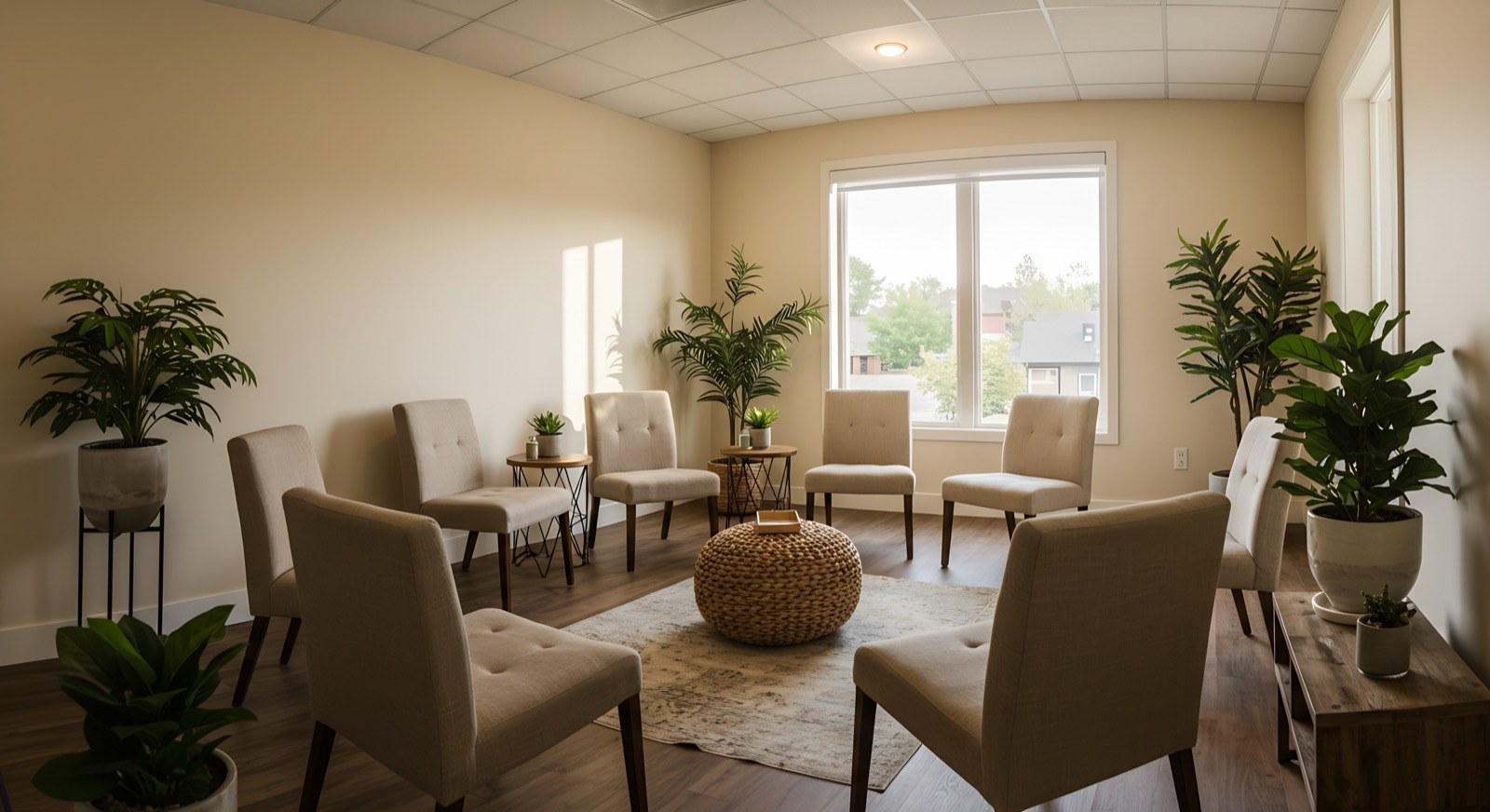
For most people who can be treated safely as outpatients, a program close to home has a real advantage: you are more likely to keep showing up, and showing up is most of what outpatient treatment asks of you. That does not make local treatment automatically better. Some people need medically supervised detox or residential care first, distance from the people tied to their use, or a specialized program nobody offers nearby.
We are an outpatient program in Berlin, NJ, so we have an obvious interest in this question. That is a reason to show our work.
Why does distance matter in outpatient treatment?
Outpatient care works through repetition, several days a week for weeks at a time. A 45-minute drive is manageable once. Five times a week, through a car repair or a bad week at home, it becomes a reason to skip.
The research is older but consistent:
- A 2003 study in the Journal of Substance Abuse Treatment followed 1,735 people in urban outpatient drug treatment. Those who traveled less than a mile were 50% more likely to complete treatment than those who traveled farther, after accounting for demographics and type of drug problem. People traveling more than four miles were significantly more likely to have a shorter stay.
- A national study of 33,952 veterans leaving VA inpatient substance use treatment, published in Addictive Behaviors in 2003, found that people who lived 10 miles or less from outpatient care were 2.6 times more likely to get follow-up care than those who lived more than 50 miles away. Only 40% of those living more than 25 miles from the nearest aftercare facility got any aftercare.
- A California study of 560 people in alcohol treatment found that, for inpatient clients, living farther from the program was associated with more drinking in the year after intake. It found no such link for outpatient clients.
These studies show association, not proof, and none was done in South Jersey. Still, a program you can reach reliably beats a better-sounding one you will stop attending.
What does staying home give you that leaving does not?
In outpatient care, the test happens every night. You rehearse a plan in group on Tuesday, try it that evening, and bring back what went wrong on Wednesday. The neighbor who drinks and the payday that used to mean buying come into the room because they are happening now.
Family can take part week to week. A 2008 meta-analysis of 12 randomized trials of behavioral couples therapy, covering 754 people, found that this structured approach, in which the partner takes part in sessions, produced better outcomes than individual treatment alone, including less frequent substance use and fewer consequences at follow-up. That finding applies to married or cohabiting couples, and one study suggested it may not extend to people with milder drinking problems. Our family therapy page explains how we bring relatives in.
The ASAM Criteria, the American Society of Addiction Medicine’s placement standard, call for people to be reassessed regularly and moved to a more or less intensive level as their needs change. The lighter phase that follows intensive treatment, usually called continuing care, helps modestly: a 2014 meta-analysis of controlled trials found a small but statistically significant effect, and a 2021 review found that longer continuing care with active efforts to keep people engaged may produce more consistently positive results. Stepping down inside the same program means no new program to find and no new intake.
For alcohol use disorder, a 2020 Cochrane review found that structured programs designed to get people involved in Alcoholics Anonymous produced higher rates of continuous abstinence at 12 months than other established treatments such as cognitive behavioral therapy, and rated that evidence high-certainty. Meetings found during treatment are ones you can still walk into a year later.
Partial care takes the day and intensive outpatient takes the morning, so neither fits every schedule, but people can keep working where they can, and children and bills are not put on hold.
When is leaving home the better choice?
Local outpatient care is the wrong starting point in several situations:
- You need medically supervised withdrawal. Stopping alcohol after heavy daily drinking can cause seizures and delirium tremens, and MedlinePlus describes alcohol withdrawal as a condition that “may quickly become life-threatening.” The FDA warns that stopping benzodiazepines abruptly or cutting the dose too fast can cause withdrawal reactions, including seizures, that can be life-threatening. That calls for detox first, wherever the right bed is. If withdrawal has already started and someone has a seizure, severe confusion, or hallucinations, call 911.
- Home is where the danger is. If the people you live with are using, supplying, or threatening you, sleeping there every night can undo the day’s work. The ASAM Criteria assessment weighs a person’s “obstacles and liabilities” alongside their “strengths, assets, resources, and support structure.” When the support structure is the problem, residential care or a change of housing may be the safer plan.
- Outpatient care has been tried at the right intensity and has not held. That can point to residential treatment.
- You need something that is not offered nearby. A specialized program for a particular population or a co-occurring condition may be worth the drive, or the flight.
Often the right plan uses both: detox or residential care wherever it is available, then step-down treatment close to home. That handoff is what the VA study measured.
What do the Camden County numbers show?
The state Division of Mental Health and Addiction Services’ 2025 Substance Use Overview for Camden County, dated July 2026, counts 6,863 treatment admissions of Camden County residents in 2025, as reported by treatment providers to the state. Only 35% of those admissions were to programs in Camden County. Another 19% were in Atlantic County, 19% in Gloucester County, and 9% in Burlington County.
Much of the difference is in residential care. Residential detox accounted for 1,784 admissions of county residents, 26% of the total, and short-term residential care for another 1,411, or 21%. Treatment sites inside Camden County reported 681 residential detox admissions all year, 406 short-term residential admissions, and 1 long-term residential admission. Even if every in-county detox admission had been a county resident, most of the residential detox that county residents received still happened outside the county.
Two cautions. An admission is an event, not a person: the same report counts 3,558 individual residents admitted, and about half of them were admitted more than once during the year. And “local” does not stop at a county line. For someone in Blackwood or Sicklerville, a program across the Gloucester County line may be the closest one.
How do you judge a local program?
Start with the license. Ask for the license number and which services it covers. An outpatient license does not cover residential care, and not every outpatient program is licensed to manage withdrawal. The state’s addiction services treatment directory, run by the Division of Mental Health and Addiction Services, lists many licensed programs with their license numbers and services. Several programs have similar names, so match the address and license number, not just the name.
Then ask direct questions. What happens if the assessment shows I need more care than you provide? Does the step-down happen here? Who calls me if I stop showing up? Can my family take part? Do you prescribe medication for opioid or alcohol use disorder on site?
Money is the clearest red flag. Be wary of any offer of cash, free rent, travel, or other perks tied to enrolling in a particular program. Under N.J.S.A. 2C:40A-6, as amended by P.L.2025, c.121 in August 2025, it is a third-degree crime in New Jersey, with a $50,000 fine and mandatory restitution, to pay, offer, solicit, or receive a kickback, bribe, or rebate for referring patients to a licensed substance use disorder treatment facility, or in exchange for a patient using its services. Federal law, 18 U.S.C. § 220 (the Eliminating Kickbacks in Recovery Act), makes paying for referrals or patronage a crime when the treatment is billed to insurance or another health care benefit program. A companion law signed the same day, P.L.2025, c.122, makes it unlawful for licensed New Jersey treatment providers to make false or misleading statements about their services, network status, or location, or to imply an affiliation with another provider without that provider’s written consent. A call center that will not tell you which facility you would attend, or where it is, is a reason to hang up.
Use these questions on us too. South Jersey Recovery Program is licensed by the New Jersey Department of Health as an outpatient substance use disorder treatment center, license #2001009, at 1044 NJ-73, Suite A, Berlin. Ask us for a copy of the license.
When to get emergency help
- Call 911 for an overdose, a seizure, trouble breathing, someone who cannot be woken, severe confusion, hallucinations, fever, or a racing or irregular heartbeat during withdrawal, or any immediate danger.
- Call or text 988 for suicidal thoughts or a mental health or substance use crisis. It is free and answers 24 hours a day.
- Call the SAMHSA National Helpline at 1-800-662-4357 for free, confidential treatment referrals in English and Spanish, any time. New Jersey’s addiction helpline, ReachNJ, is at 1-844-732-2465.
Do not stop heavy daily drinking or long-term benzodiazepine use on your own. Talk to a clinician first.
How South Jersey Recovery Program can help
We are an outpatient program at 1044 NJ-73 in Berlin, with three levels of care:
- Partial care, Monday through Friday, 9:30 a.m. to 3:30 p.m.
- Intensive outpatient, 9:30 a.m. to noon, five days a week to start and three as you step down.
- Standard outpatient, one or two sessions a week.
People move down through those levels without changing programs. Medications for opioid and alcohol use disorder are prescribed on site.
We do not provide detox, inpatient, or residential care. If you need medically supervised detox or residential care, we will tell you and help you find it, and we can start outpatient care with you when you finish.
Our pages for Voorhees, Marlton, Blackwood, and Sicklerville cover the trip and the local picture, and the Blackwood page says plainly when a closer program may make more sense. Call (856) 788-6914 for a confidential assessment.
At a glance
- Shorter travel is linked to better completion and follow-up care.
- Leave first if you need medically supervised withdrawal, home is unsafe, outpatient care has not held, or you need a specialized program.
- In 2025, only 35% of Camden County residents’ treatment admissions were to programs in the county.
- Check the license, ask about step-down care, and treat offers of money or perks for enrolling as a red flag for patient brokering, a crime in New Jersey.
Sources
- Beardsley K, et al. Distance traveled to outpatient drug treatment and client retention. Journal of Substance Abuse Treatment. 2003;25(4):279-285. pubmed.ncbi.nlm.nih.gov/14693257
- Schmitt SK, Phibbs CS, Piette JD. The influence of distance on utilization of outpatient mental health aftercare following inpatient substance abuse treatment. Addictive Behaviors. 2003;28(6):1183-1192. pubmed.ncbi.nlm.nih.gov/12834661
- Klinger JL, et al. Effects of Distance to Treatment on Subsequent Alcohol Consumption. Drugs: Education, Prevention and Policy. 2018;25(2):173-180. pubmed.ncbi.nlm.nih.gov/29551857
- Powers MB, Vedel E, Emmelkamp PM. Behavioral couples therapy (BCT) for alcohol and drug use disorders: a meta-analysis. Clinical Psychology Review. 2008;28(6):952-962. pubmed.ncbi.nlm.nih.gov/18374464
- Blodgett JC, et al. How effective is continuing care for substance use disorders? A meta-analytic review. Journal of Substance Abuse Treatment. 2014;46(2):87-97. pubmed.ncbi.nlm.nih.gov/24075796
- McKay JR. Impact of Continuing Care on Recovery From Substance Use Disorder. Alcohol Research: Current Reviews. 2021;41(1):01. pubmed.ncbi.nlm.nih.gov/33500871
- Kelly JF, Humphreys K, Ferri M. Alcoholics Anonymous and other 12-step programs for alcohol use disorder. Cochrane Database of Systematic Reviews. 2020;3:CD012880. pubmed.ncbi.nlm.nih.gov/32159228
- American Society of Addiction Medicine. About the ASAM Criteria. asam.org/asam-criteria/about-the-asam-criteria
- New Jersey Division of Mental Health and Addiction Services. Substance Use Overview 2025: Camden County. July 2026. nj.gov/humanservices/dmhas
- New Jersey Division of Mental Health and Addiction Services. Addiction Services Treatment Directory. njsams.rutgers.edu/TreatmentDirectory
- New Jersey Legislature. P.L.2025, c.121 (patient brokering, amending N.J.S.A. 2C:40A-6). pub.njleg.gov
- New Jersey Legislature. P.L.2025, c.122 (substance use treatment provider marketing). pub.njleg.gov
- 18 U.S.C. § 220, Illegal remunerations for referrals to recovery homes, clinical treatment facilities, and laboratories. law.cornell.edu/uscode/text/18/220
- MedlinePlus. Alcohol withdrawal. medlineplus.gov/ency/article/000764.htm
- U.S. Food and Drug Administration. FDA requiring Boxed Warning updated to improve safe use of benzodiazepine drug class. 2020. fda.gov
- SAMHSA. National Helpline. samhsa.gov/find-help/helplines/national-helpline
- 988 Suicide & Crisis Lifeline. 988lifeline.org